
Varanasi to Prayagraj Distance and Sangam Day Trip: Route, Boat Ride, Magh Mela 2027
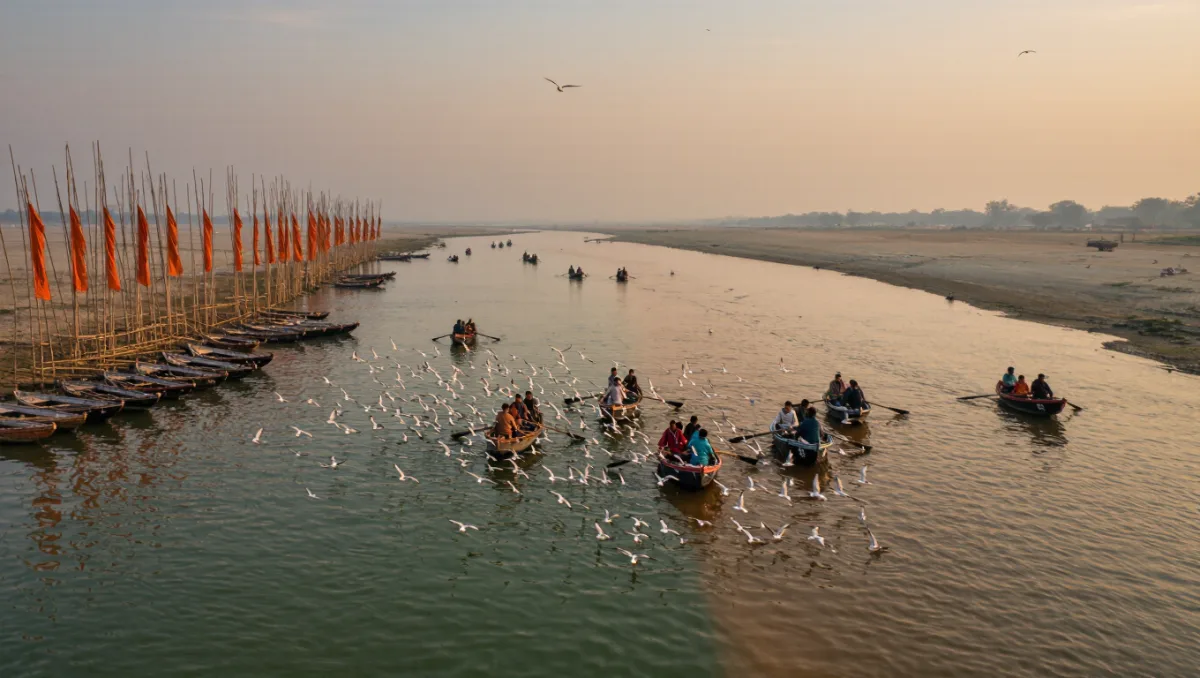
Hardly a day goes by without someone ringing us to ask about the Varanasi to Prayagraj distance. The next question is nearly always "can we go and be back tonight?" You can. It's about 125 km, and on NH-19 (the old GT Road) our cars do it in two and a half to three hours. So the Triveni Sangam, where the Ganga, the Yamuna and the unseen Saraswati meet, is the one big pilgrimage you really can fit into a day from here.
Our drivers do this run so often they could probably do it blindfolded (please don't ask them to). So what follows is simply the plan they follow: when to set off, what to see, how the boats work, and what changes when the Magh Mela is on.
Banaras to Prayagraj: cab, train or bus?
By cab it's two and a half to three hours door to door, and the car drops you right at the Sangam parking and then takes you on to everything else. Honestly, it's the only way the same-day trip feels relaxed rather than like a slog.
Trains between Banaras and Prayagraj are plentiful and take somewhere between two and a half and three and a half hours, which sounds fine until you realise you arrive at Prayagraj Junction and the Sangam is still 30 to 45 minutes away through city traffic. Great one way; pretty tiring as a day return. UPSRTC buses run all day too, but you'll need local transport at both ends, same as the train.
How the day goes
We'd get you on the road by six in the morning. Leaving early beats the traffic at both ends and gets you out on the water before the sun's properly up. There's a tea stop on the highway around half seven, and if you'd like darshan on the way, this is where you'd peel off to Vindhyachal, which adds about an hour and a half.
You'll roll into the Sangam at about nine and walk down to the boats. Getting out to the confluence, doing your snan or puja and coming back takes an hour to an hour and a half. By eleven you're at Bade Hanuman Mandir and Akshayavat, which are both right next to the Sangam anyway. Lunch in Civil Lines around half twelve, then, if anyone's still got the energy, Anand Bhawan (the Nehru family home, now a museum) at two. Set off back at half three and you're in Varanasi by about seven.
The Sangam boat ride
The boats go out from the ghats near the fort and row you to the spot where the two rivers meet. On a clear morning you can actually see the line where the greener Yamuna runs into the muddier Ganga, which is a bit magical the first time. Pilgrims take their dip off wooden platforms moored out there; others do puja from the boat itself, or a tarpan or asthi visarjan with a priest.
A few things we always tell people. Settle the price for the whole boat before you step in, and check whether the platform stop and the waiting time are included; the rate board at the ghat is your reference. If you're going between November and March you'll get flocks of gulls wheeling over the water and boatmen selling bird feed, and it's genuinely lovely, just keep the wrappers in the boat. Bring a towel and a change of clothes if you're planning to bathe (there are changing enclosures on the ghats). And for asthi visarjan, bring the asthi kalash, the cremation certificate and photo ID. We can sort the boat and a priest for you; the ritual itself runs ₹2,500 to ₹4,500 on top of the cab fare.
Bade Hanuman and Akshayavat
Bade Hanuman Mandir, which everyone calls Lete Hanuman, has a huge reclining Hanuman lying below ground level near the Sangam. In the monsoon the Ganga rises right into the shrine, and people here will tell you the river has come to bathe him. Tuesdays and Saturdays mean queues.
Akshayavat, the "undying banyan", is inside Allahabad Fort next to the Patalpuri temple. Because the fort's an army area, the tree was off limits to the public for a very long time; pilgrims have only been let in since 2019, through a gate of its own and past a security check. Leave your bags in the car and it's quick.
Magh Mela 2027: what changes
Every year, from the middle of January until around Maha Shivratri, the sandbanks at the Sangam turn into the Magh Mela, a tent city for the month-long kalpvas. The really big bathing days are Makar Sankranti, Paush Purnima, Mauni Amavasya, Basant Panchami, Maghi Purnima and Maha Shivratri. To give you a feel for it, searches for "Magh Mela Prayagraj" go from around a hundred a month in autumn to over twelve thousand at the peak, and the traffic on NH-19 does exactly the same thing.
So, a few tips from our drivers. The dates move with the moon, and the Mela Authority only fixes them a few months ahead, so wait for that before you book anything. On the big bathing days the police stop cars miles before the Sangam and you walk in with everyone else. Add an hour or two each way, and leave Varanasi by four in the morning. Ordinary Mela days are busy but perfectly doable, and the atmosphere is something you won't forget. Book your car two or three weeks ahead for the bathing days, because it's the drivers who know the diversions that run out first.
The next Maha Kumbh at Prayagraj isn't until 2037, in case you were wondering.
Varanasi to Prayagraj cab fares
These are our fixed fares, one way and then same-day round trip. A Swift Dzire for up to four is ₹2,800 / ₹4,800. An Innova Crysta for six is ₹3,800 / ₹6,500. The 12-seater tempo traveller is ₹4,200 / ₹7,800, the 17-seater ₹5,200 / ₹9,800, and the Maharaja Urbania, our luxury option for up to nine, is ₹6,800 / ₹12,500. Fuel, the driver's allowance and parking are all included. There's more on the Varanasi to Prayagraj cab page, or see our full Prayagraj tour package.
Going on to Ayodhya?
Plenty of people do. Prayagraj to Ayodhya is about 170 km, around four hours, and the Varanasi, Prayagraj, Ayodhya and back loop is one of the three-day trips we get booked for most. Our 3-day Ayodhya itinerary walks you through how to pace it.
Frequently asked questions
1. How far is Varanasi from Prayagraj?
About 125 km. Our drivers take NH-19, the old GT Road, and it's usually two and a half to three hours. Coming back from Prayagraj to Varanasi is the same road and the same time.
2. Can we see the Triveni Sangam and get back to Varanasi the same day?
Yes, easily, as long as you're away by six. That leaves time for the boat, Bade Hanuman, Akshayavat and a proper lunch, and you'll still be home around seven.
3. When's the best time to go to the Sangam?
October through March. Winter mornings are cool and the gulls are out over the water. The monsoon, July to September, is the toughest: the river's high and some ghats, and Bade Hanuman, go under.
4. When is Magh Mela 2027?
Mid-January to about Maha Shivratri, which falls in early March 2027. Makar Sankranti, Mauni Amavasya and Basant Panchami are the days that draw the biggest crowds. The Mela Authority confirms the final dates a few months before, so check with them (or us) nearer the time.
5. Can the public visit Akshayavat?
They can now. Since 2019 pilgrims have been allowed in to see Akshayavat inside Allahabad Fort, through its own gate and after a quick security check.
6. Do you arrange asthi visarjan at the Sangam?
We do, boat and priest both. Just bring the asthi kalash, the cremation certificate and photo ID with you. The ritual costs ₹2,500 to ₹4,500 over and above the cab fare.
Thinking about a Sangam trip? Let us know the date and how many of you are coming and we'll confirm a fixed fare. Call or WhatsApp us on +91 92503 31290, or plan your trip online.
Book Your Varanasi Trip Today
Need a tempo traveller, cab, or luxury bus for your Varanasi pilgrimage? Varanasi On Wheels offers 24/7 service with transparent pricing.