Dev Deepawali 2026: A Foreigner's Guide to Varanasi's Biggest Night
Dev Deepawali 2026 falls on Tuesday, 24 November 2026. If you are travelling from outside India and you only see Varanasi once, this is the night to aim for — and it is also the night that most rewards planning. This guide is written specifically for international visitors, because almost everything published about Dev Deepawali assumes you already understand the religious calendar, already know the ghats by name, and already have somebody local sorting your transport.
What Dev Deepawali actually is
Dev Deepawali means "the Diwali of the Gods". It falls on Kartik Purnima, the full moon of the Hindu month of Kartik, which is about fifteen days after the Diwali most people outside India have heard of. In 2026 that puts Diwali around 9 November and Dev Deepawali on 24 November.
The difference matters. Diwali is celebrated nationwide, mostly in homes, with lamps and fireworks. Dev Deepawali is a Varanasi event, and it is public. On that one evening, all eighty-four ghats along the riverfront — the stone stairways running down to the Ganga — are lined with earthen oil lamps called diyas. Seen from the water, the entire curve of the city ignites at once.
There is no ticket and no entry fee. It is a civic and religious celebration, not a show put on for tourists, and visitors of any faith or none are welcome to watch.
Why a boat is not really optional
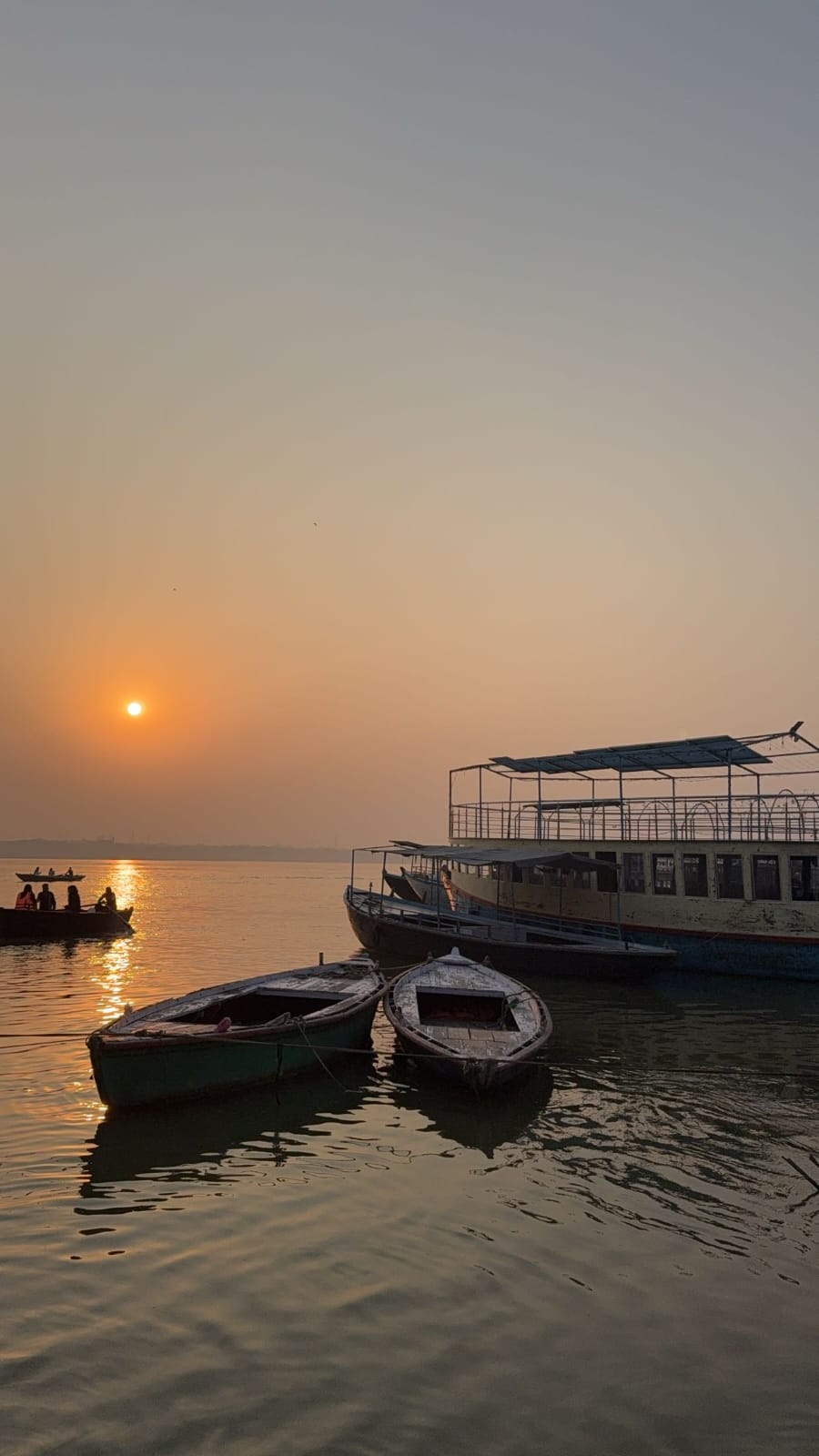
This is the part first-time visitors underestimate. The ghats face the river. The lamps are arranged to be seen from the river. Standing on the steps, you can see the ghat you are standing on and perhaps a little of the next one — you cannot see the effect that everybody comes for.
The second problem is density. Hundreds of thousands of people attend. By late afternoon the riverfront is shoulder to shoulder, moving between ghats on foot becomes slow and then impossible, and the good positions near Dashashwamedh Ghat are long gone.
A reserved boat solves both. You get the panoramic view and you get a seat you do not have to defend for three hours.
Shared seat or private boat?
A shared seat is the economical option and works well for one or two people who mainly want to see the lit ghats and the Ganga Aarti. A private boat makes sense for families, groups, anyone with elderly parents or young children, and anyone serious about photography — because you control where the boat holds position and for how long. Above roughly ten people, a private boat is usually both better and comparable per head.
Either way: book weeks ahead, not days. Boats for this night are the most oversubscribed booking in the Varanasi year. Private boats go first, then the shared seats with the best sightlines. Our boat booking guide covers the mechanics.
How the evening runs
Two separate things happen, and visitors regularly plan for one and miss the other.
- Around 5:15–5:30 PM — the diyas are lit in sequence across the ghats as the light goes. This is the visual spectacle.
- Around 6:00 PM — the grand Ganga Aarti begins at Dashashwamedh Ghat: fire, conch shells, bells, synchronised priests. It runs roughly 45 minutes.
To catch both comfortably you want to be on the water by about 4:30 PM. That means leaving your hotel considerably earlier than seems reasonable, because the approach roads are already congested by mid-afternoon.
The road closures — the thing that goes wrong
On the evening of Dev Deepawali, roads within roughly two kilometres of the riverfront close to vehicles. No car, no auto-rickshaw, no exceptions.
In practice this means your driver drops you at the nearest open point and you walk the last stretch to the boarding ghat. That part is manageable. The part that catches people out is afterwards — finishing at around 7:15 PM in a crowd of a hundred thousand, in the dark, with no vehicle able to reach you and every rickshaw driver quoting festival prices.
The fix is unglamorous: agree a fixed pickup point and time before you get out of the car. Photograph the spot. Save your driver's number to WhatsApp. This single step is the main practical argument for having a driver for the day rather than hailing transport on the night.
What to wear and how to behave
Most of this is the same as any day at the ghats, with one seasonal addition.
- Cover shoulders and knees. The ghats are an active religious space, and this applies to men as well as women.
- Bring a warm layer. Late November evenings on the water are genuinely cold, and visitors consistently underestimate this. A jacket, not a shawl.
- Shoes you can slip off. You will remove them at any temple you enter.
- Never photograph the cremations. At Manikarnika and Harishchandra ghats bodies are cremated in the open, continuously, including on festival nights. Photographing them is deeply offensive to the families present. If someone offers to let you shoot "for a donation", they have no authority to give that permission and you are being set up.
- Ask before photographing people. Sadhus posing photogenically on the steps generally expect payment and will ask afterwards.
Our first-timer's guide to Varanasi goes into etiquette, food and water safety, and common scams in more depth.
Booking order for an international visitor
Counter-intuitive but correct:
- Boat first. It is the scarcest thing and the reason you are coming.
- Vehicle and airport transfer second. Varanasi's airport is Lal Bahadur Shastri International (VNS), about 25 km out, 40–60 minutes into the city.
- Hotel third. Rooms are expensive and scarce near the ghats for this date, but there are more rooms in Varanasi than there are good boat seats.
- Flights around all of it. Arrive at least a day early. Landing on 24 November itself is a bet on Indian domestic aviation you do not need to make.
You will need a valid Indian visa — most leisure travellers use the e-Visa, applied for online through the official government portal before departure. Apply at least a week ahead and carry a printed approval.
What to add around it
Nobody flies to India for one evening. The natural additions:
- A sunrise boat ride the following morning — leave around 5:30 AM. Completely different mood, arguably the best hour in Varanasi.
- Kashi Vishwanath Temple and the old city lanes. See the Kashi Darshan package.
- Sarnath, 10 km away, where the Buddha gave his first sermon. Calm and green — a useful decompression after the festival.
- Ayodhya or Prayagraj as day trips, if you have the days.
Frequently asked questions
1. What date is Dev Deepawali 2026?
Tuesday, 24 November 2026 — the night of Kartik Purnima. Lamp lighting begins around 5:15–5:30 PM and the grand Ganga Aarti at Dashashwamedh Ghat starts around 6:00 PM. The date shifts each year with the lunar calendar, so always confirm for your travel year.
2. Is Dev Deepawali the same as Diwali?
No. They are separate festivals about fifteen days apart. Diwali is the nationwide festival of lights celebrated largely in homes; Dev Deepawali follows on Kartik Purnima and is a public riverfront event specific to Varanasi. In 2026, Diwali falls around 9 November and Dev Deepawali on 24 November.
3. Can foreigners attend Dev Deepawali?
Yes. It is a free public celebration and international visitors are welcome and common. No permit or special ticket is required. You need a standard Indian tourist visa to be in the country, which is not specific to the festival.
4. How far in advance should I book?
Several weeks at minimum, and earlier is better. Boats are the constraint, not hotels. If you are reading this more than a month before the date, you are in good time; a week before, expect limited choice.
5. Is it safe in that size of crowd?
Broadly yes, and there is a heavy police presence. The sensible precautions are ordinary ones: keep valuables in a front pocket or zipped bag, agree a meeting point in case your group separates, do not rely on mobile signal (networks get congested), and be realistic about whether elderly relatives or toddlers will cope with the density. From a boat, most of this concern disappears.
6. What if it rains or plans change?
Late November is reliably dry in Varanasi — the monsoon is long finished. The more common disruption is a delayed flight into VNS, which is why arriving a day early matters.
7. Do I need a guide as well as a driver?
Not necessarily. An English-speaking driver who knows the ghats will explain what you are watching. A licensed guide adds historical and religious depth and is worth it if you want the layers behind the ritual — we can arrange one on request.
Planning Dev Deepawali 2026? See the full Dev Deepawali 2026 page for boats, transfers and vehicles, or message us on WhatsApp — we answer questions from overseas travellers with no obligation. Call or WhatsApp +91 92503 31290.
Book Your Varanasi Trip Today
Need a tempo traveller, cab, or luxury bus for your Varanasi pilgrimage? Varanasi On Wheels offers 24/7 service with transparent pricing.