
Varanasi for Foreigners: A First-Timer's Guide
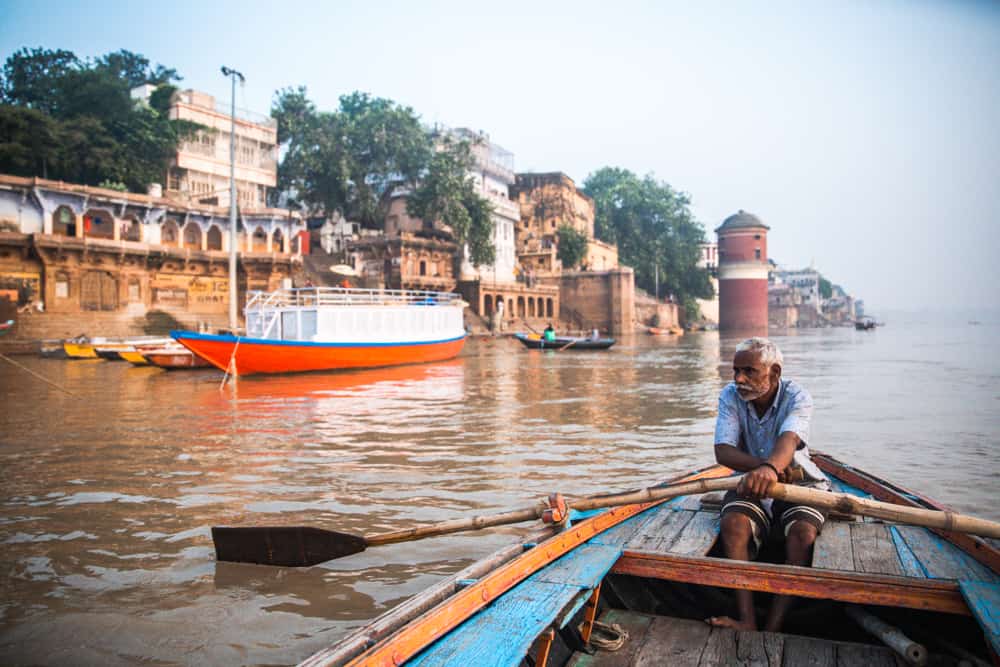
Varanasi is one of the oldest continuously inhabited cities on earth, and for most international visitors it is also the most intense place they have ever been. That intensity is the point — but it is much easier to enjoy when you know what is coming. This guide covers the practical things a first-time foreign visitor actually needs: getting in, what to wear, how to behave at the ghats and temples, what is safe to eat, what will be attempted on you, and how to move around a city built of lanes too narrow for cars.
We are a Varanasi family business running our own vehicles here since 1993, and a large share of the people we drive are seeing India for the first time. Everything below is what we end up explaining in the car.
Getting in: visa, flights and arrival
Almost every leisure traveller enters India on an e-Visa, applied for online before departure through the official Indian government portal. Apply at least a week ahead, use the government site rather than an agency, and carry a printed copy of the approval along with the digital one — you will be asked for it at immigration.
Varanasi's airport is Lal Bahadur Shastri International Airport (VNS), also called Babatpur, about 25 km northwest of the city. The drive into the centre takes 40–60 minutes depending on traffic. There are direct international connections from a handful of Asian hubs, but most visitors connect through Delhi or Mumbai. Many arrive instead at Varanasi Cantt railway station, which is central and chaotic in equal measure.
Arrange your pickup before you land. The arrivals area is busy with drivers offering rides, and negotiating a fare with a heavy bag after a long flight is the worst possible moment to be doing it. A pre-booked fixed-rate transfer removes the single most common first-hour frustration.
What to wear
India is not formal, but it is modest, and Varanasi is a religious city rather than a beach town. The practical rule:
- Cover shoulders and knees in public, and especially at temples. This applies to men as well as women.
- Loose cotton beats tight synthetics. It is more comfortable and draws less attention.
- Shoes you can slip off easily. You will remove them constantly — every temple, many shops, some homes.
- A scarf or shawl is genuinely useful: head covering at some shrines, sun cover, and a layer for cold mornings on the river.
- November to February evenings are cold, particularly on a boat. Bring a jacket; visitors routinely underestimate this.
Nobody will refuse you entry for wearing shorts in the street. But dressing modestly measurably reduces staring and unwanted attention, which makes the whole trip more relaxed.
Ghat and temple etiquette
The ghats are the stone steps running down to the Ganga. They are not a monument or a viewpoint — they are a working religious space where people bathe, pray, do laundry, teach, and cremate their dead, all at once and all day.
1. Never photograph the cremations
This is the one rule that matters more than all the others. At Manikarnika and Harishchandra ghats, bodies are cremated in the open, continuously. Photographing or filming them is deeply offensive to the grieving families present, and you may be confronted. Put the camera away entirely as you approach. If someone offers to let you photograph "for a donation", they are not authorised to give that permission and you are being set up.
2. Remove shoes before entering temples
There is almost always a stall or counter to leave them at for a few rupees. Leather items are prohibited in some temples — belts and bags included.
3. Ask before photographing people
Sadhus in saffron sitting photogenically on the steps frequently expect payment, and will ask after the fact. Agree beforehand or do not shoot. Ordinary worshippers deserve the same courtesy you would extend at home.
4. Walk around, not through
If a ritual, a prayer circle or an aarti is in progress, go behind it. Do not cross between a worshipper and the river or the shrine.
5. Use your right hand
Give, receive, eat and pass with the right hand. The left is considered unclean. Small thing, noticed constantly.
Food and water: what is actually safe
Varanasi street food is excellent and is a real part of the experience. Most travellers who get ill do so from water and raw items, not from cooked street food.
- Bottled or filtered water only. Check the seal. Never drink tap water, and skip ice unless you are somewhere that clearly uses filtered water.
- Eat where it is busy and cooked in front of you. High turnover means fresh oil and fresh ingredients.
- Be cautious with raw salad, cut fruit and chutneys from stalls — these are washed in tap water.
- Try the famous things: kachori sabzi for breakfast, tamatar chaat, malaiyo in winter, and a lassi in a clay kulhad.
- Varanasi is largely vegetarian, and much of the old city near the temples is strictly so. Alcohol is not sold near the ghats.
- Bhang is legally sold here in lassi and sweets. It is cannabis, its effects are strong and slow to arrive, and every year visitors underestimate it badly. If you do not want it, say so explicitly when ordering.
Scams and hassle to expect
None of this is dangerous — Varanasi is a safe city for visitors, including solo women travellers who dress modestly and avoid empty lanes after dark. But persistent commercial attention is guaranteed, and knowing the patterns removes most of the friction.
- The "closed temple" redirect. A helpful stranger tells you your destination is shut for a ceremony and offers an alternative — which is a shop paying commission. Verify for yourself.
- Unsolicited guides. Someone attaches themselves, narrates for twenty minutes, then demands a large fee. Decline clearly at the start; polite ambiguity is read as consent.
- Boat pricing on the day. Fares quoted at the water's edge are several times the fair rate, especially at sunrise and during festivals. Book in advance.
- Cremation "donations". Someone poses as a volunteer collecting wood money for poor families, with an official-looking book. It is a long-running fraud.
- Silk shop pressure. Banarasi silk is genuinely wonderful and genuinely faked. Buy from established shops, not from wherever a driver or guide steers you.
A firm, friendly "no thank you" without breaking stride works better than explanation. Engaging is read as interest.
Getting around
The old city is a maze of lanes far too narrow for any vehicle, and navigation apps are close to useless in them. Realistically you will walk the lanes and drive everything else.
- Auto-rickshaws are cheap and everywhere. Agree the fare before getting in; meters are not used.
- Cycle rickshaws suit short hops near the ghats.
- A private car with a driver is what most international visitors end up using, because it removes the daily fare negotiation and the driver waits while you explore. A Varanasi local sightseeing cab covers the ghats and temples; the same driver handles day trips to Sarnath, Ayodhya, Prayagraj or Bodhgaya.
- Tempo travellers (12 to 26 seats) are the standard choice for groups and multi-generation families.
Ask for an English-speaking driver when you book. In a city where the context behind what you are looking at is most of the value, it changes the trip.
When to visit
October to March is the comfortable window, with pleasant days and cold mornings. April to June reaches 40–45°C and is genuinely punishing. July to September brings the monsoon; the river runs high and some ghats flood, which is atmospheric but limits boating.
The great set-piece is Dev Deepawali, fifteen days after Diwali on Kartik Purnima, when all eighty-four ghats are lit with earthen lamps. In 2026 it falls on 24 November. It is spectacular and it is the single most oversubscribed night of the year — see our Dev Deepawali 2026 guide and book a boat well ahead.
A sensible first three days
Day 1 — Arrive, rest, then evening Ganga Aarti at Dashashwamedh Ghat from a boat rather than the crowded steps.
Day 2 — Sunrise boat ride (leave around 5:30 AM; this is the best hour in Varanasi), Kashi Vishwanath Temple, then the lanes of the old city on foot. Rest through the afternoon heat.
Day 3 — Sarnath, 10 km away, where the Buddha gave his first sermon — calm, green, and a complete change of pace from the ghats. Museum included.
With more time, add Ayodhya, Prayagraj, Chitrakoot or Bodhgaya as day trips or an overnight circuit.
Frequently asked questions
1. Is Varanasi safe for foreign tourists?
Yes. Violent crime against visitors is rare. The realistic risks are stomach upsets, pickpocketing in dense crowds, and commercial scams. Dress modestly, keep valuables close at the ghats during festivals, avoid deserted lanes late at night, and use pre-arranged transport rather than accepting rides from strangers.
2. Do I need to speak Hindi?
No. English is widely understood in hotels, at tourist sites and among drivers and guides. Learning "namaste" and "dhanyavaad" (thank you) is appreciated but not necessary.
3. How many days do I need in Varanasi?
Three full days is the sweet spot — two is rushed, and beyond four you will want day trips. Add two more for Ayodhya and Prayagraj, or three for the Buddhist circuit through Bodhgaya.
4. Can I attend the Ganga Aarti as a non-Hindu?
Yes, absolutely. The evening Ganga Aarti at Dashashwamedh Ghat is a public ceremony and visitors of every background are welcome to watch. Viewing from a boat is more comfortable than from the steps and gives a far better view.
5. Are all temples open to foreigners?
Most are. Kashi Vishwanath Temple admits non-Hindus but has airport-style security, restrictions on what you may carry in, and often long queues — bring your passport as photo ID. Some smaller shrines restrict the inner sanctum to Hindus; this is not personal and is normal across India.
6. How much cash should I carry?
Cards work at hotels and larger restaurants, and UPI dominates locally but generally requires an Indian bank account. Carry cash in small denominations for rickshaws, boats, stalls and shoe-minding. ATMs are common; withdraw inside bank branches where possible.
7. What is the one thing most first-timers get wrong?
Trying to see everything in one day. Varanasi rewards slowness — one sunrise on the river, unhurried, will stay with you longer than six sights ticked off. Build in an afternoon rest; the heat and the sensory load are real.
Planning a first trip to Varanasi? Message us on WhatsApp before you fly — we are happy to answer questions with no obligation, including ones that have nothing to do with hiring a vehicle. Call or WhatsApp +91 92503 31290, see the airport transfer service, or plan your trip.
Book Your Varanasi Trip Today
Need a tempo traveller, cab, or luxury bus for your Varanasi pilgrimage? Varanasi On Wheels offers 24/7 service with transparent pricing.