
Winter Pilgrimage Season in Varanasi: A Spiritual Journey in the Holy City
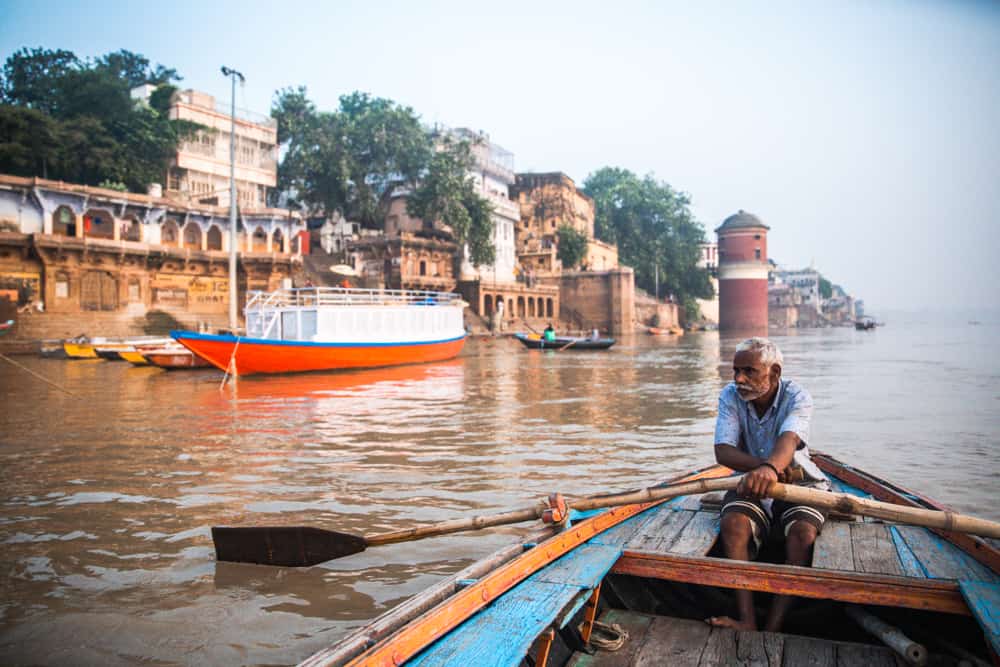
The Varanasi winter runs from November to February, and it is the season the city is built for. Daytime temperatures sit between 10°C and 25°C, the river is low and calm, boats run every day, and every ghat step is walkable. It is also the busiest and most expensive window of the year, which is the part most guides leave out.
Varanasi On Wheels has worked every winter pilgrimage season since 1993. For most of the families we carry this is a spiritual journey planned years in advance, not a holiday. Here is what the season actually involves, including where it gets difficult.
Why the Varanasi winter is the best season for pilgrimage
Three things line up. The heat is gone, so a full day of darshan, ghats and Sarnath is physically comfortable rather than an endurance test. The Ganga is at its low winter level, so the full sweep of steps from Assi to Raj Ghat is continuous and boats operate reliably morning and evening. And the festival calendar is dense, so there is usually something happening on the river while you are there.
The festivals that define the season
- Dev Deepawali — the largest night of the year on the ghats, fifteen days after Diwali, when every step from Assi to Raj Ghat carries an oil lamp. Book months ahead; see our Dev Deepawali guide.
- Ganga Mahotsav — a multi-day music and culture festival on the riverfront in the run-up to Dev Deepawali.
- Makar Sankranti — mid-January, one of the heaviest ritual-bathing days of the year. Expect very early crowds at the main bathing ghats.
- Maha Shivaratri — late in the season, and the single busiest day at Kashi Vishwanath.
The cold is real in the early morning
This is the practical thing people underestimate. Afternoon highs of 22–25°C are pleasant, but December and January mornings drop to 5–10°C, and the 4:30–7:00 am window is when almost everything worth doing happens — Mangala Aarti, Ganga snan, the sunrise boat ride. On the water, before dawn, with river wind, it is genuinely cold.
Dense river fog is the other winter factor. It can delay a sunrise boat by an hour and it regularly disrupts flights and trains into Varanasi in late December and January. If you are connecting onward the same day, leave real margin.
What to pack
- Layers rather than one heavy coat — you will shed them by 11 am.
- A windproof outer layer specifically for the boat; it is colder on the river than on the ghat.
- Socks you can remove easily. Temple entry is barefoot, and winter stone is cold.
- A change of clothing if anyone in the group intends to bathe in the river.
Booking realities of peak season
November to February is when demand for pilgrimage travel in Varanasi peaks. Hotels near the ghats fill weeks ahead around Dev Deepawali and Makar Sankranti, and vehicle availability tightens at the same time. Two things follow: book earlier than feels necessary, and lock your rate in writing. Our per-kilometre rates are fixed at the time of booking and do not move with demand, which is the main reason groups come back to us in season.
Vehicles for a winter pilgrimage
Cold mornings and early starts change what is comfortable. Every vehicle below is our own, with a driver who works for us.
- Innova Crysta — ₹16/km. The standard choice for a family of four to six doing darshan, ghats and Sarnath in a day.
- Tempo travellers — from ₹23/km, in 12, 17, 20 and 26 seat configurations, for extended family and temple groups.
- Maharaja Tempo Traveller — ₹30/km, with recliner seating for longer multi-city circuits.
- Force Urbania — ₹30/km, seventeen seats with individual AC vents and reclining seats.
- Swift Dzire — ₹11/km, for couples and airport transfers.
Driver allowance, tolls, parking and 5% GST are billed separately and stated upfront. Get an exact quote for your dates and group size.
A realistic winter itinerary
Most groups underestimate how much a Varanasi winter day can hold, then over-schedule and lose the evening. What works:
- Pre-dawn: sunrise boat from Dashashwamedh or Assi, then Mangala Aarti.
- Morning: a holy visit to Kashi Vishwanath, then breakfast. Go before 9 am in peak season or plan for a long queue.
- Midday: Sarnath, 12 km out — the museum, Dhamek Stupa and the excavation site.
- Late afternoon: rest. The evening starts early and the aarti crowd builds from 5 pm.
- Evening: Ganga Aarti at Dashashwamedh, ideally from a boat rather than the bank.
Extending beyond the city is straightforward in winter road conditions — Ayodhya at 200 km, Prayagraj at 125 km, or Bodhgaya at 260 km all work as day trips or short overnights.
Is the winter worth the crowds?
Yes, for a first visit or for any trip where ritual and darshan are the point. The weather, the reliable boats and the festival calendar outweigh the queues. If you have been before and want the city quieter, late February — after Shivaratri, before the heat — is the best-value fortnight in the year.
To plan a winter pilgrimage, call or WhatsApp +91 92503 31290. We will tell you honestly which dates are already tight.
Book Your Varanasi Trip Today
Need a tempo traveller, cab, or luxury bus for your Varanasi pilgrimage? Varanasi On Wheels offers 24/7 service with transparent pricing.